When renovating a home, flooring is one of the most important decisions you’ll make. It influences how the home looks, how the rooms connect, how the space functions, and how much of your renovation budget remains for other improvements.
Hardwood flooring has long been associated with beautiful, high-end homes. Its natural character, warmth, and longevity make it an excellent choice in many situations. But hardwood isn’t necessarily the best solution for every property, particularly when existing floors are damaged, budgets are limited, or a home is being prepared for sale.
As a Dallas interior designer who also manages renovation and pre-listing make-ready projects, I’ve worked with both hardwood and luxury vinyl plank (LVP). My recommendation depends on the condition of the home, the client’s goals, and the overall investment.
Sometimes preserving or refinishing hardwood is absolutely the right decision. Other times, a quality luxury vinyl plank provides a more practical and economical solution without sacrificing the appearance we’re trying to achieve.


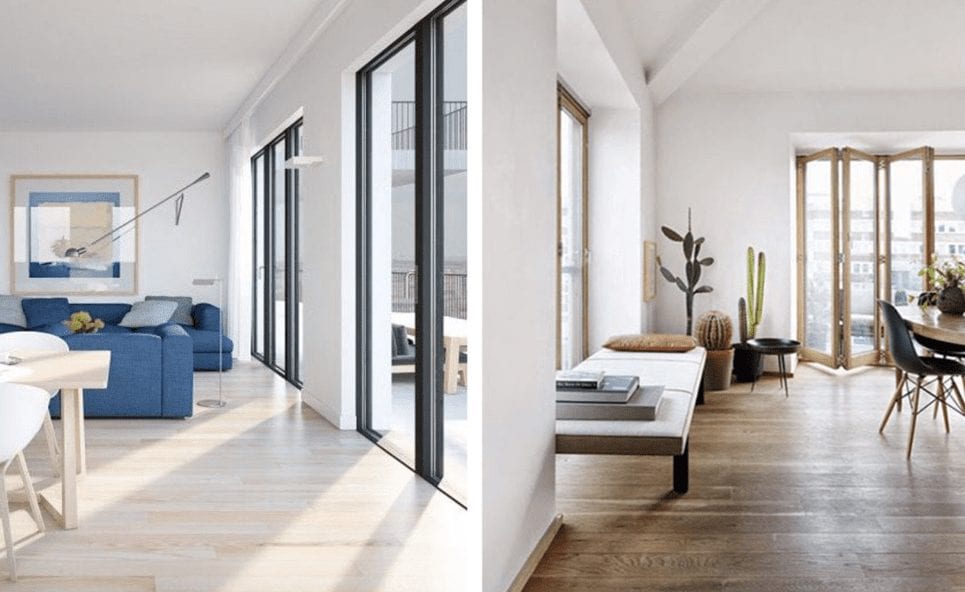
Real hardwood offers natural beauty that manufactured flooring can imitate but never entirely duplicate. Depending on the product, hardwood can also be sanded and refinished, extending its useful life for decades.
However, hardwood is vulnerable to moisture, scratches, and other damage. Refinishing can be expensive, particularly when existing floors have extensive damage or when multiple rooms need to be coordinated.
Luxury vinyl plank is a manufactured flooring product designed to reproduce the appearance of wood. Today’s better-quality products offer realistic wood patterns, attractive finishes, and a range of colors and plank dimensions.
LVP is generally more resistant to everyday moisture than hardwood, making it an appealing option for busy households, homes with pets, and certain renovation situations. However, it isn’t indestructible or automatically waterproof as an installed floor system. Product construction, installation quality, and subfloor conditions all matter.
The question isn’t simply which material is better. It’s which material makes the most sense for the particular home.
.


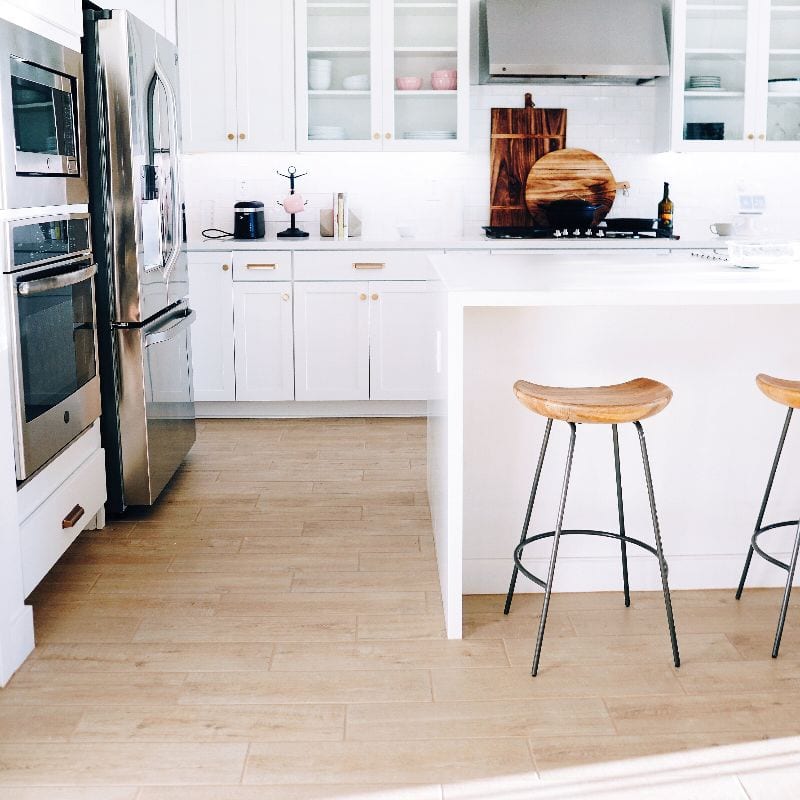
One of my pre-listing make-ready projects illustrates this decision particularly well.
The property was a luxury home valued at approximately $1.2 million. It had been occupied by renters for several years, and the existing flooring consisted of a combination of hardwood and carpeting.
Unfortunately, the hardwood and carpet had sustained considerable damage from dogs, and ttherefore they both needed eplacement.
We had two primary options.
The first was to retain the hardwood, repair and refinish it, and replace the carpeting. But in a home at this price point, we weren’t going to install inexpensive, entry-level carpeting. The replacement carpet needed to be appropriate for the property, which added to the cost.
The second option was to remove the damaged hardwood and carpeting and start fresh with a quality luxury vinyl plank.
After considering the condition of the floors, the cost of refinishing, the expense of suitable carpeting, and the overall presentation of the property, we chose the second option.
The result was a cohesive, updated appearance that worked beautifully with the home’s interiors and photographed well for the real estate listing.
More importantly, it was a sensible investment for our client.
The property sold within one week of being listed. While flooring alone doesn’t sell a home, the updated floors were an important part of the property’s overall make-ready presentation.
This is a good example of why material decisions should be based on the property’s condition, market position, and financial objectives—not simply on the assumption that a luxury home must have hardwood.


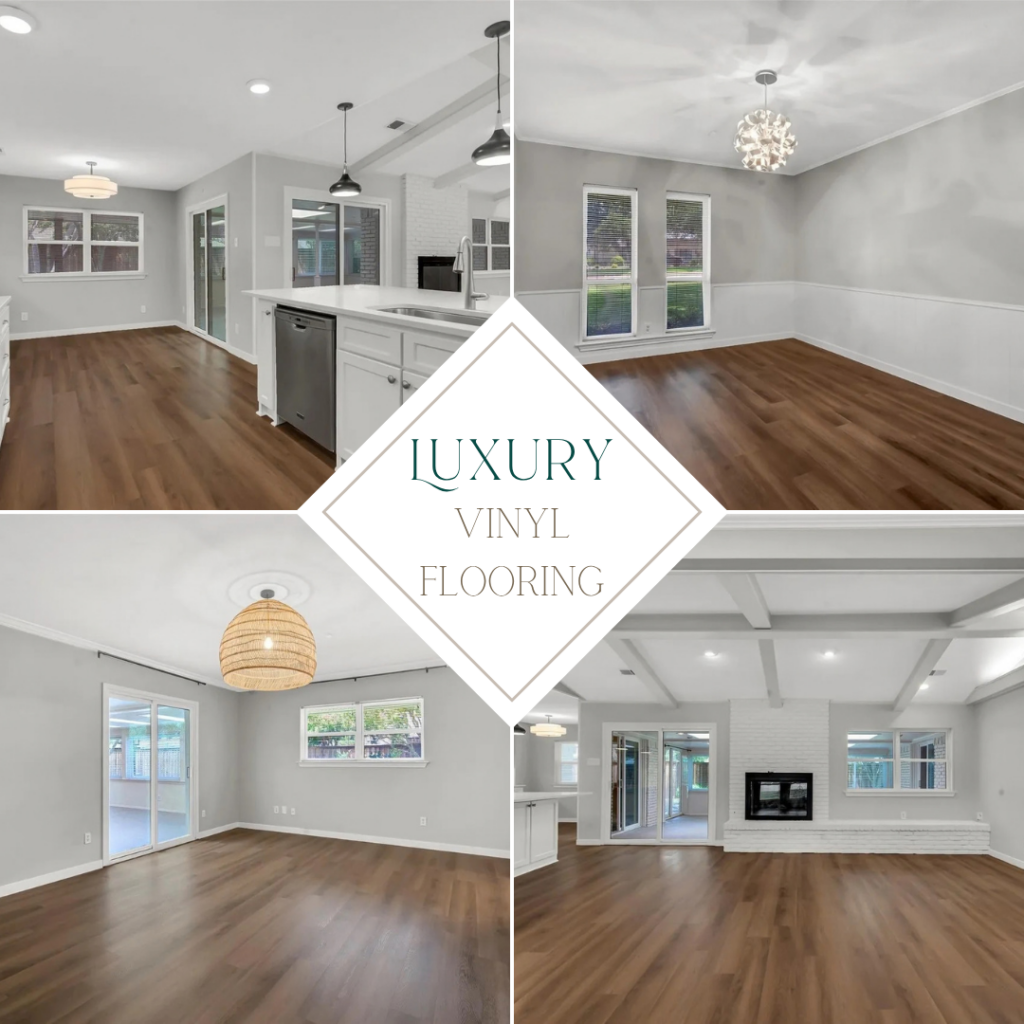
Luxury vinyl plank flooring selected by Design by KETI for a $1.2 million Dallas-area home prepared for sale
When preparing a Dallas home for sale, the goal is different from renovating a home for long-term personal enjoyment.
We want to address visible problems, improve the property’s presentation, and make thoughtful investments without unnecessarily over-improving the home.
Old carpeting, damaged hardwood, and inconsistent flooring can make an otherwise attractive property feel dated or poorly maintained.
Replacing those surfaces with a well-selected luxury vinyl plank can provide several advantages:
Of course, removing hardwood isn’t always the best financial decision. If the existing floors are in good condition and can be refinished economically, preserving them may be preferable.
The key is evaluating the entire project rather than making flooring decisions in isolation.
One of my design preferences is to use a single flooring material throughout the main living areas whenever practical.
I find that continuous flooring creates a more cohesive appearance, improves the visual connection between rooms, and can make a home feel more luxurious and spacious.
This is especially valuable in older Dallas homes where previous renovations may have introduced several different flooring materials.
Moving from hardwood to carpet, then to another wood-look product, can visually interrupt the flow of the home.
Using one carefully selected material can simplify the overall design.
Bathrooms and laundry rooms often have different performance requirements, so I evaluate those spaces separately.
Of course, some homeowners genuinely prefer carpet in bedrooms for comfort, softness, or sound absorption. That’s a personal choice, and a good designer should respect how the homeowner wants to live.
My role is to explain the options and help clients understand how those decisions affect the finished home.
Not all luxury vinyl flooring is created equal. A product that looks attractive in a small sample may not perform or look the same once installed throughout an entire home.
Here are some considerations I discuss with clients.
The quality of the printed wood pattern, surface texture, finish, and plank construction makes a significant difference.
I look for realistic coloring, appropriate plank proportions, and patterns that complement the home’s architectural style.
An overly artificial finish can undermine the appearance we’re trying to achieve, even when the product itself is durable.
Before installing new flooring, we need to evaluate what’s underneath.
Uneven surfaces, moisture issues, damaged subfloors, and differences in floor heights can create installation problems.
Simply choosing a floating floor doesn’t eliminate the need for proper preparation.
Flooring transitions, expansion requirements, door clearances, baseboards, and the direction of the planks all affect the final result.
These details are particularly important when we’re replacing multiple flooring materials with one continuous surface.
Luxury vinyl plank can be an excellent option for active households, but it can still scratch, dent, or become damaged.
Performance varies by manufacturer and product. Homeowners should evaluate the wear layer, warranty, maintenance instructions, and suitability for the intended rooms.
If you’re renovating a home you plan to enjoy for decades, hardwood may offer benefits that justify the additional investment.
If you’re preparing a property for sale, managing a rental, or renovating an older home with a limited budget, quality LVP may offer a better balance of appearance, practicality, and cost.


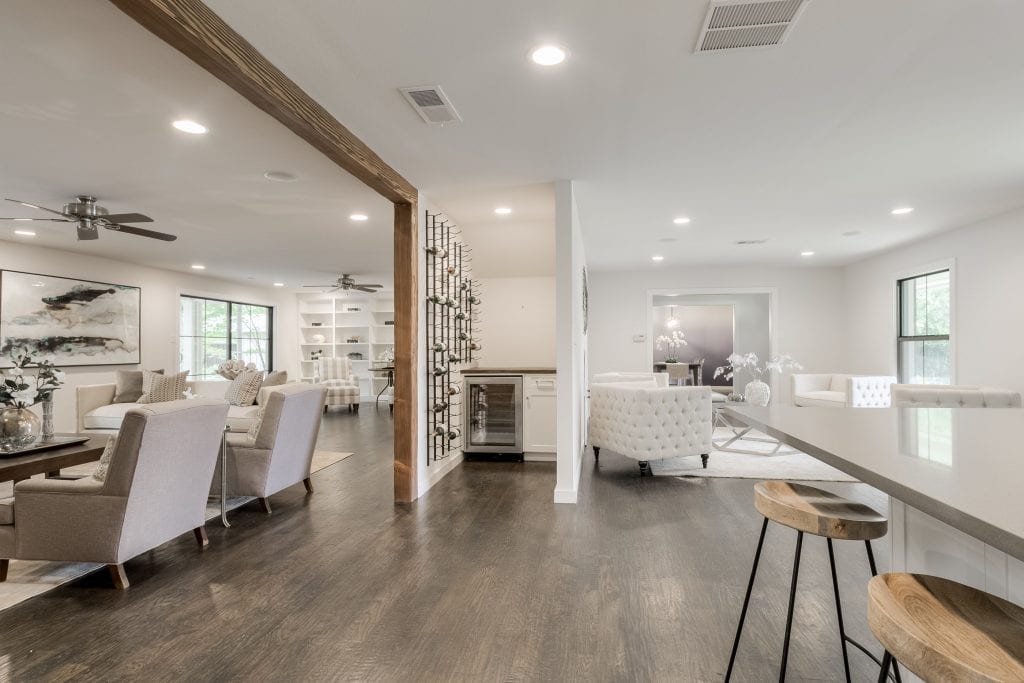
Light wood flooring creates a cohesive look in this open-concept home interior.
There is no universal answer.
Some luxury properties benefit from preserving their original hardwood floors, particularly when those floors contribute to the home’s architectural character.
Other properties may benefit more from a cohesive flooring replacement that addresses extensive damage and improves the overall presentation.
I’ve used luxury vinyl plank successfully in both home renovations and pre-listing make-ready projects. I don’t consider it a substitute that should automatically replace hardwood. I consider it another material option that, when selected and installed thoughtfully, can serve a homeowner’s goals very well.
The value is in knowing when to use it.
Whether you’re planning a renovation for your own enjoyment or preparing a property for the Dallas real estate market, flooring decisions should be part of a coordinated plan.
At Design by KETI, we help homeowners evaluate material selections, renovation priorities, budgets, and the details that bring a project together.
Our approach combines interior design with renovation planning and project oversight, so decisions are made with both appearance and execution in mind.
Planning a Dallas home renovation or pre-listing make-ready project?
— Keti
About the Author
Keti Abazi is an award-winning Dallas interior designer known for creating timeless, livable spaces that balance beauty and function.